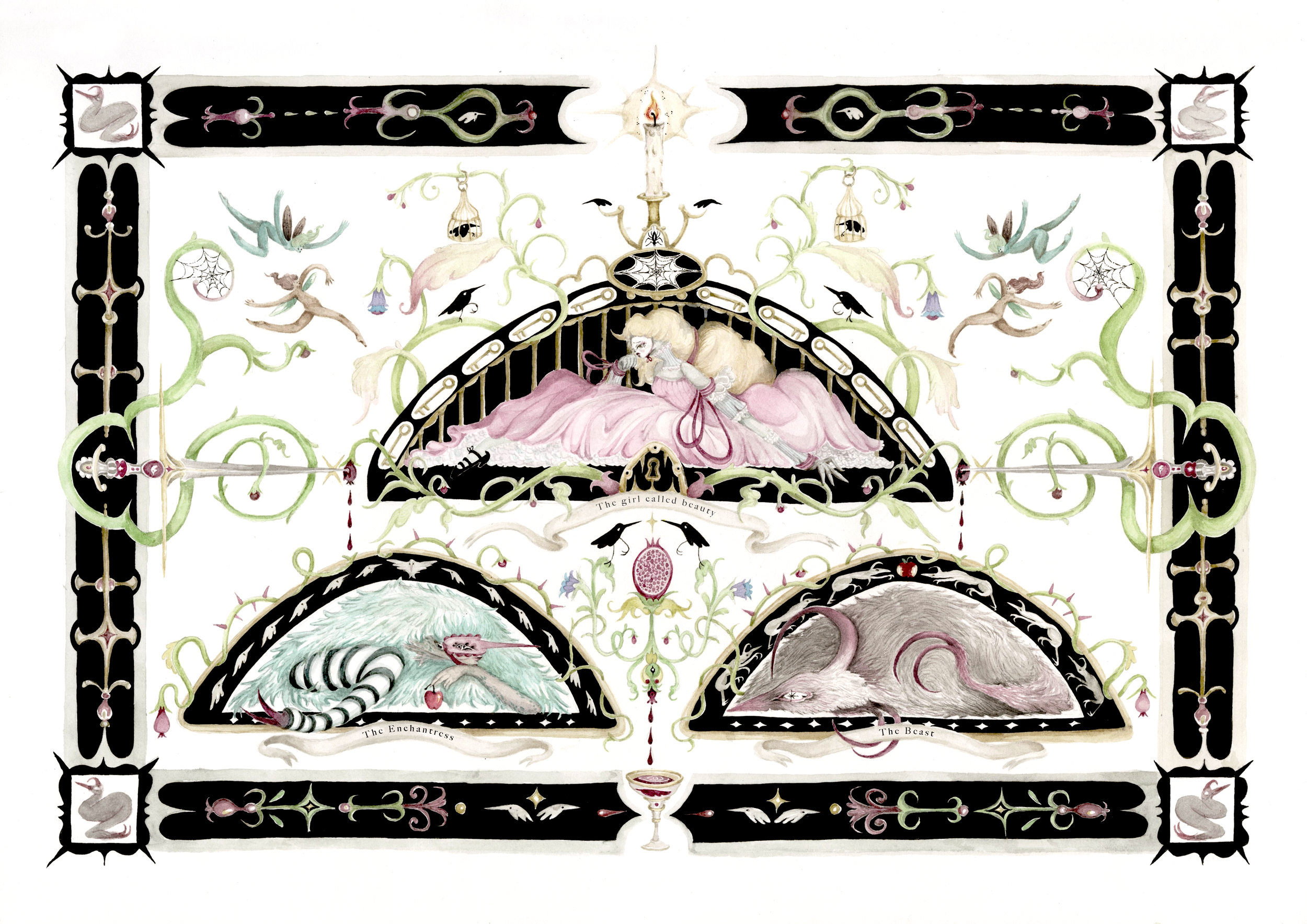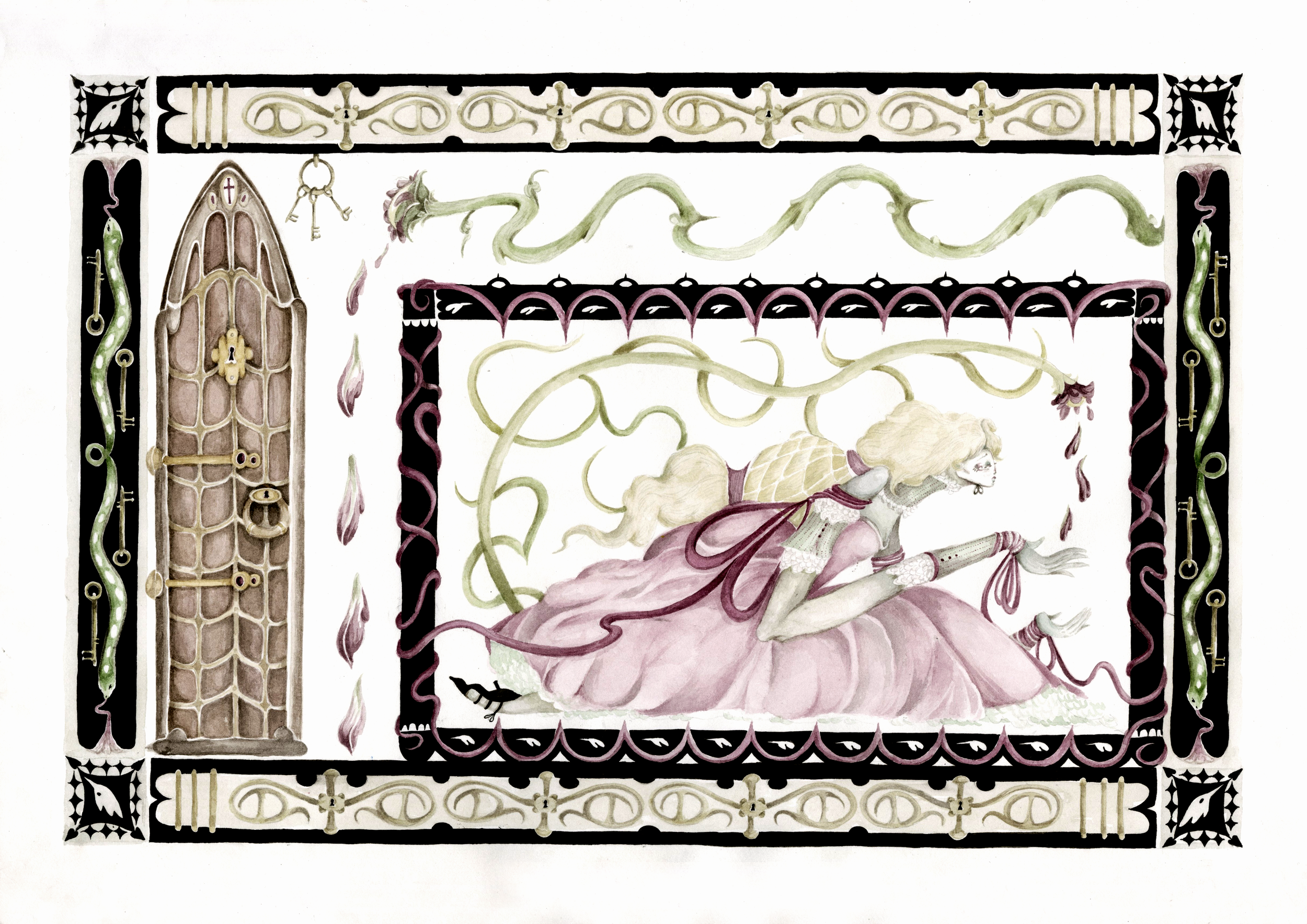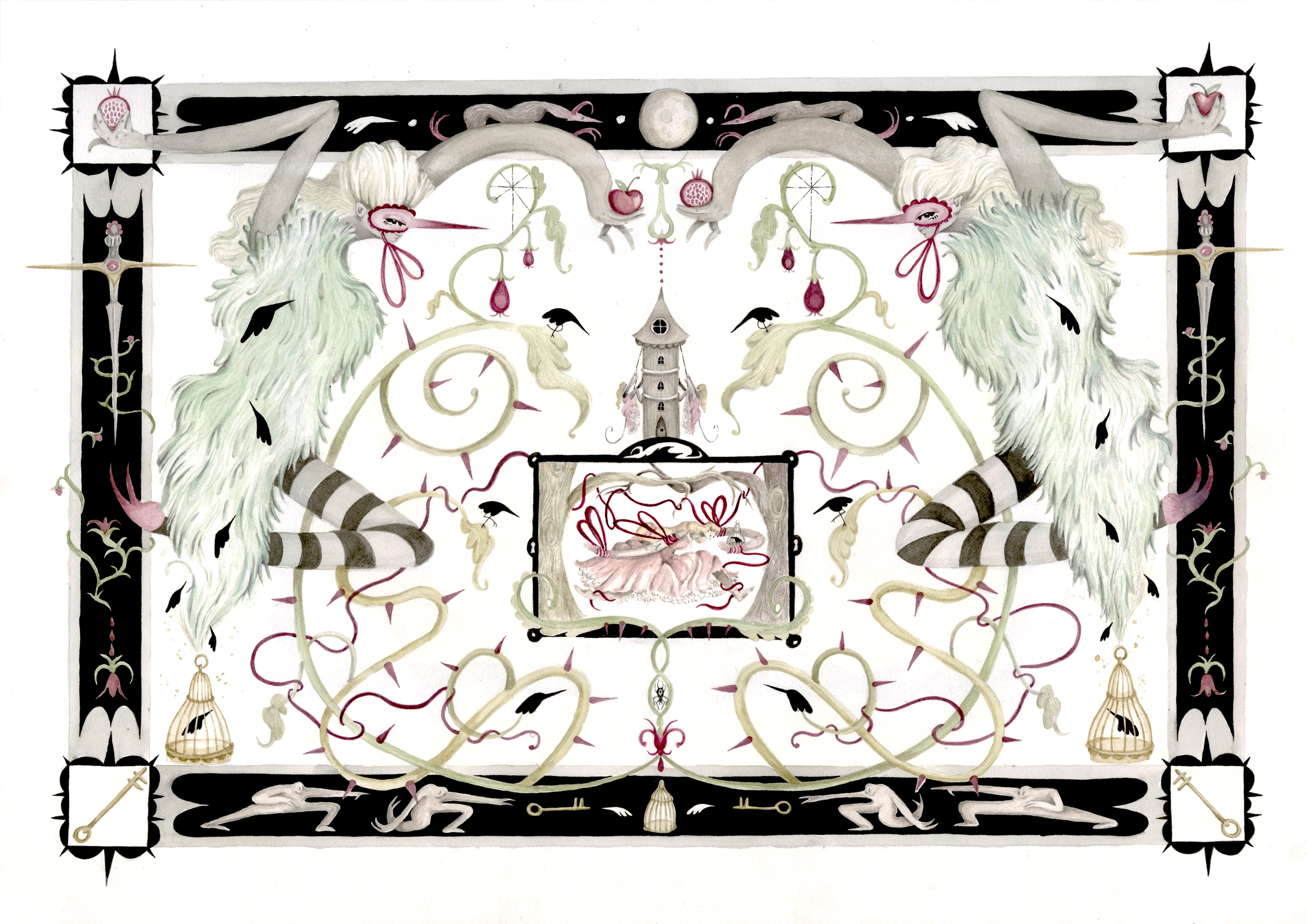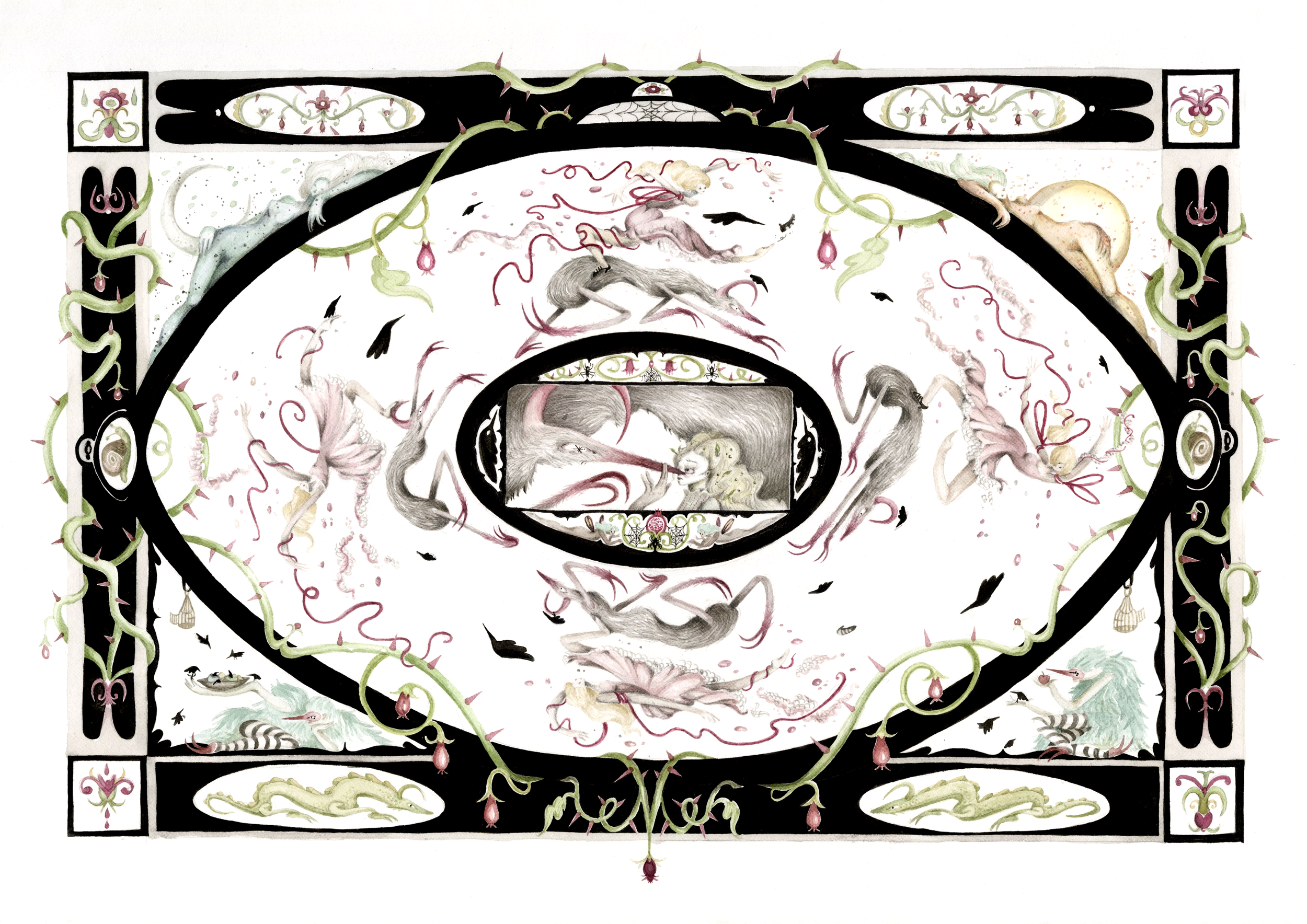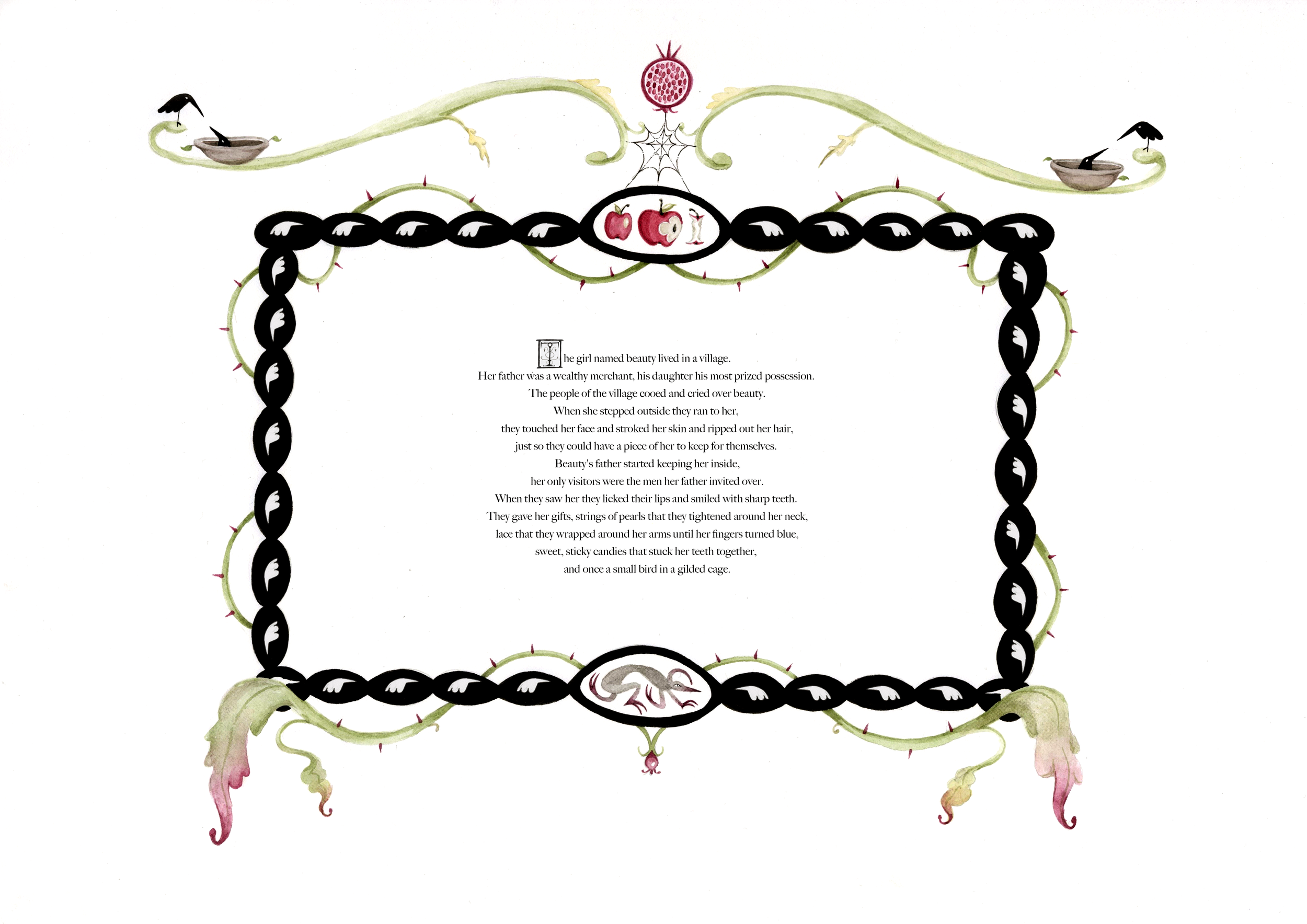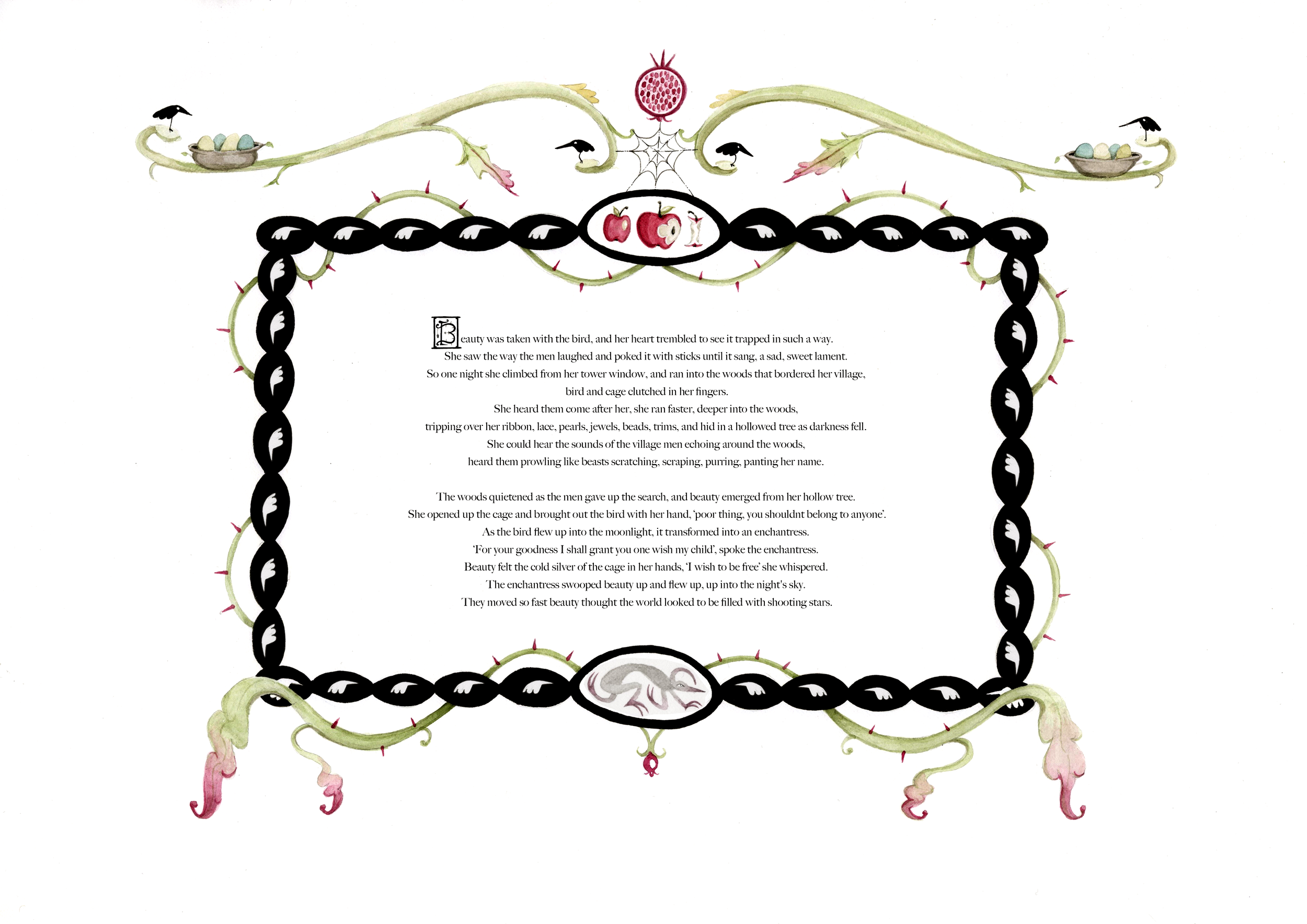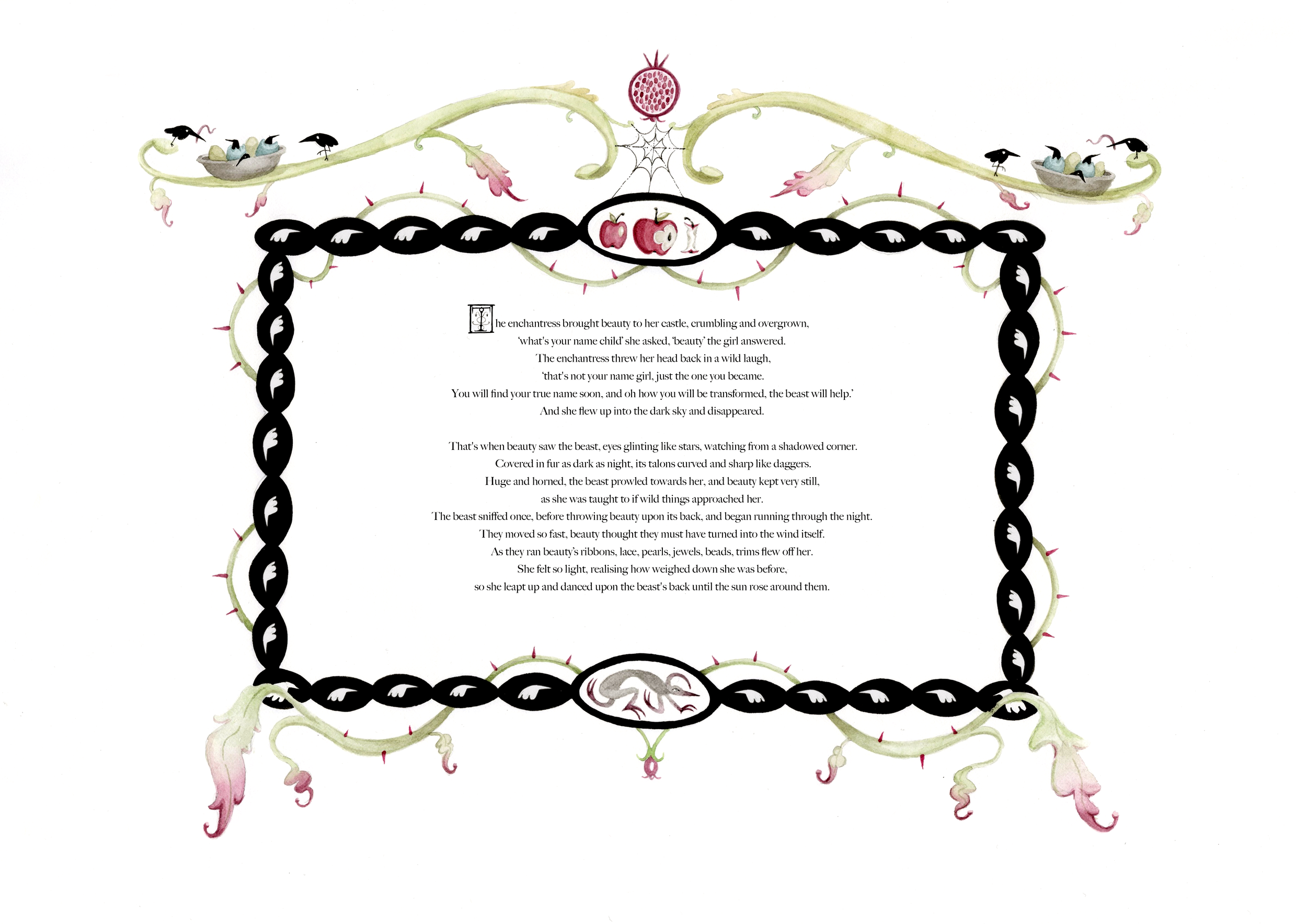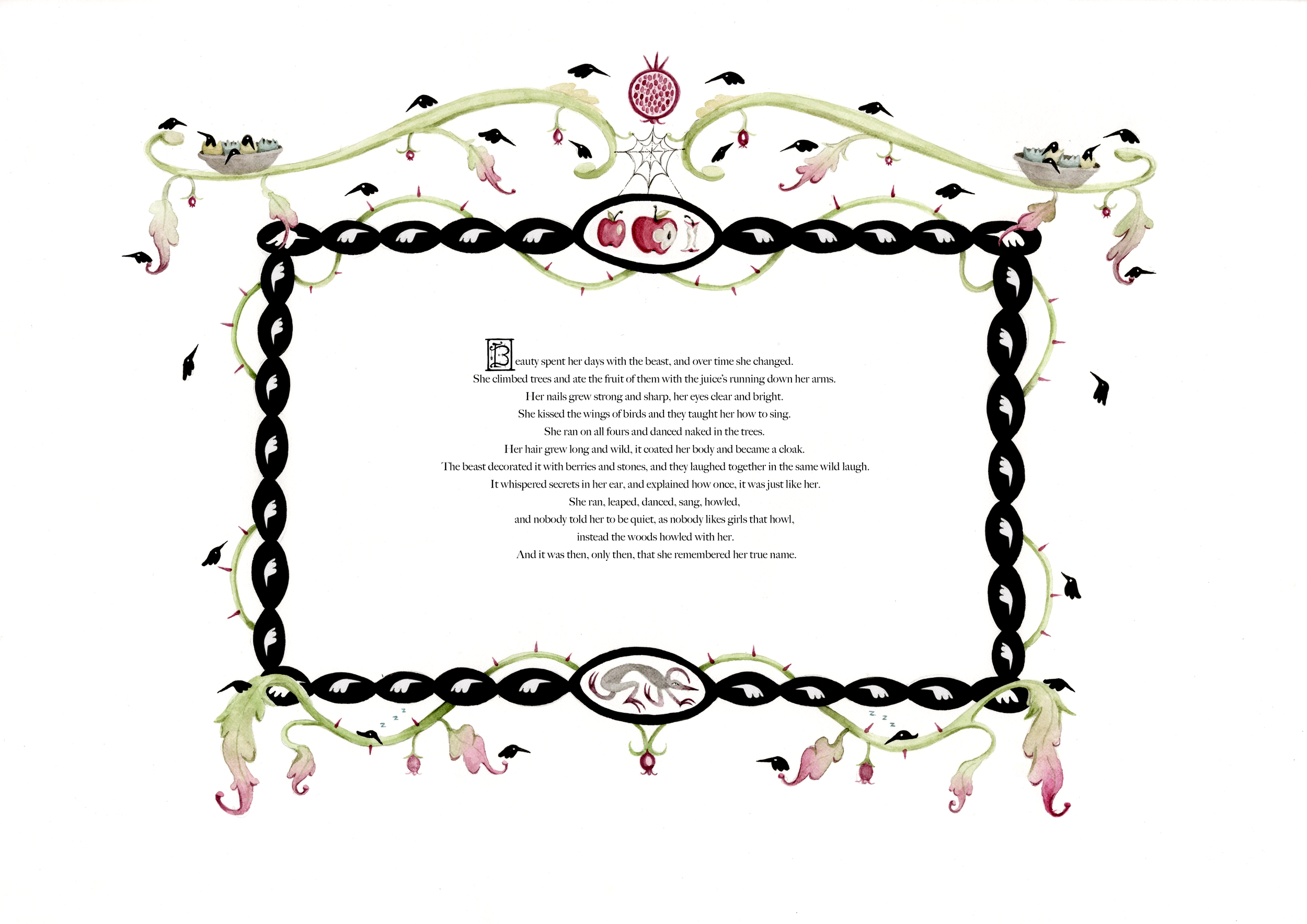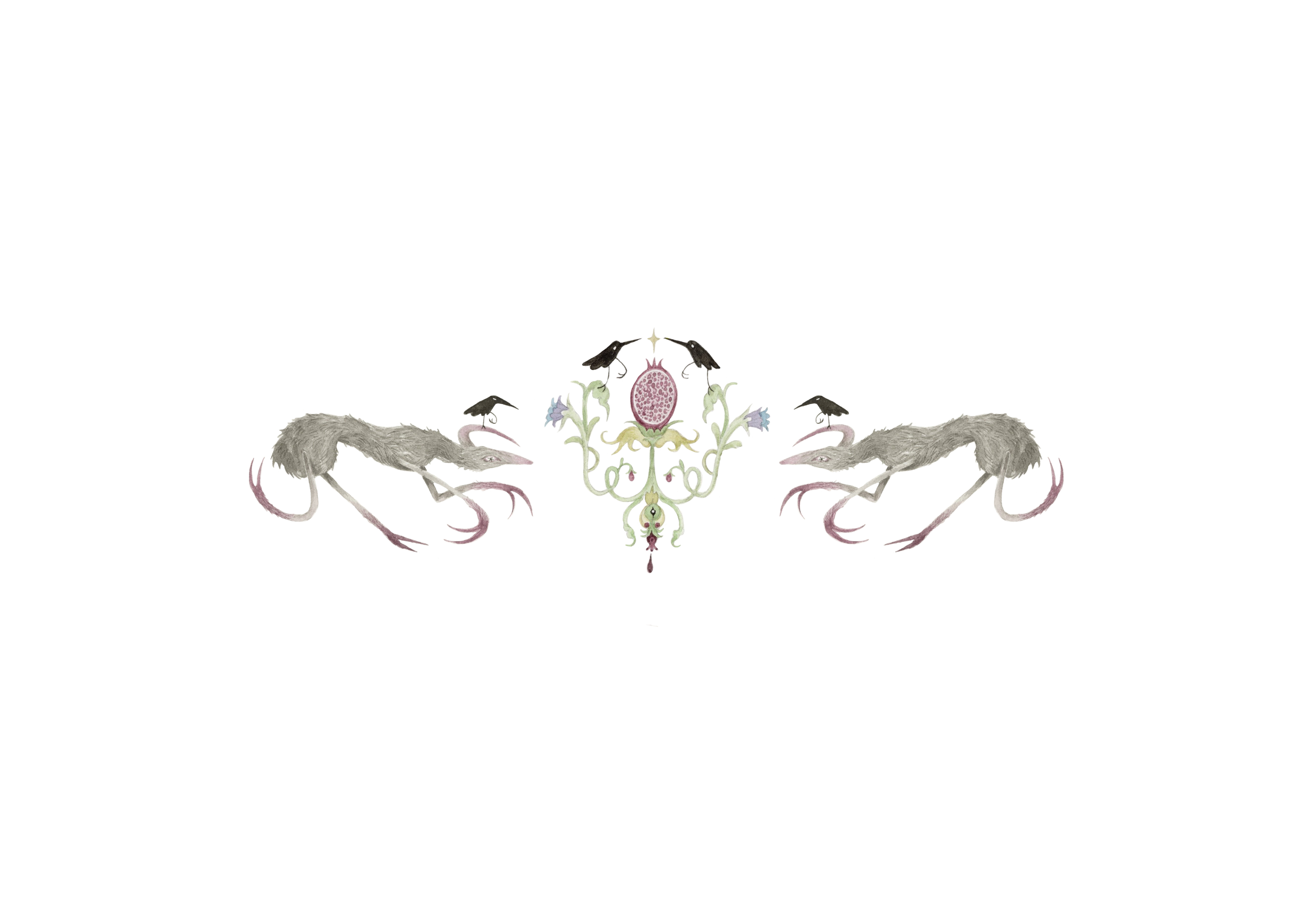
‘Beauty & Beast’ was inspired by the discovery that the original version was a critique of the 17th Century marriage system written by French writer Madame de Villeneuve. She utilized the metaphorical language of fantasy to address issues of concern to the women of her day, chief among these was a critique of a marriage system in which women could claim few legal rights. The beast was a metaphor for the real-life fears of young girls who didn't know if they were to marry a prince or beast.
This first version of the tale is one of proto-feminist critique and rebellion. Subsequent versions followed suit, rewritten for younger and younger readers as fairy tales moved from adult salons into children's nurseries. By the 19th century, the Beast's monstrous shape is only a kind of costume that he wears; he poses no genuine domestic danger or sexual threat to Beauty, despite keeping her isolated and imprisoned. The popularisation of the printing press in the 19th century meant that the story was published without crediting the women who created it, her name wiped from the credit of her own story. As time went on and the story was changed, adapted, rewritten and republished, the original message of the tale was filtered away.
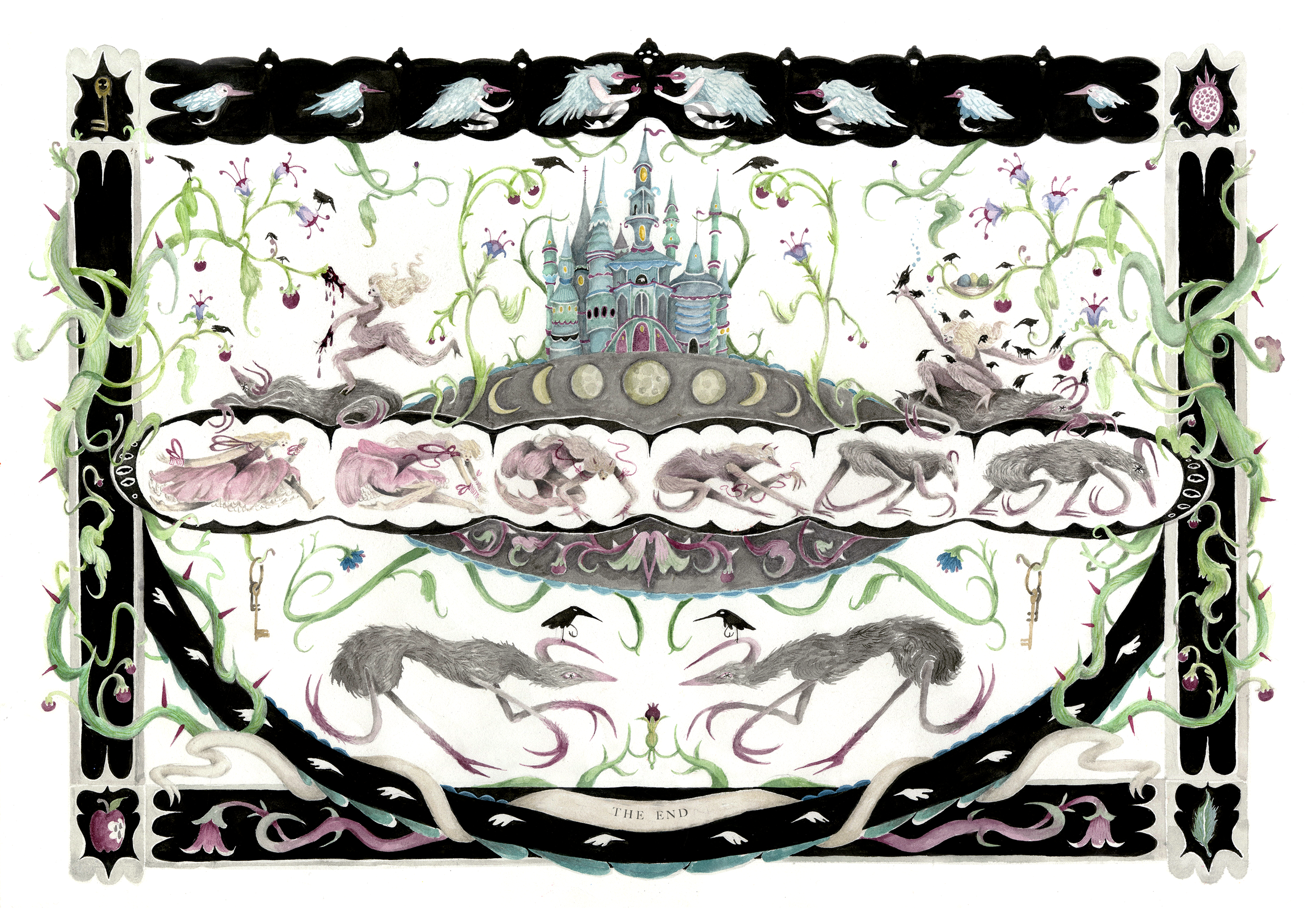
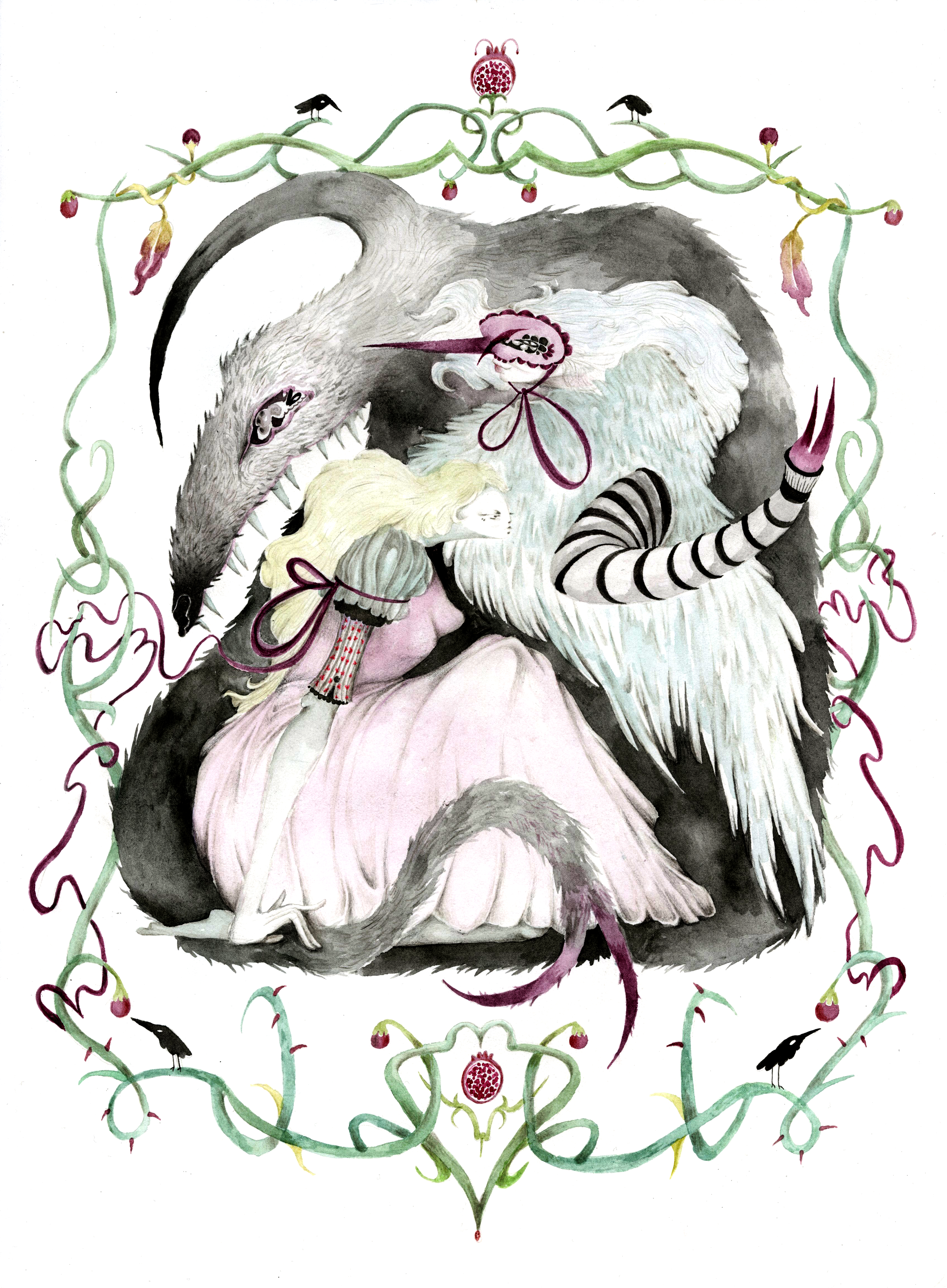
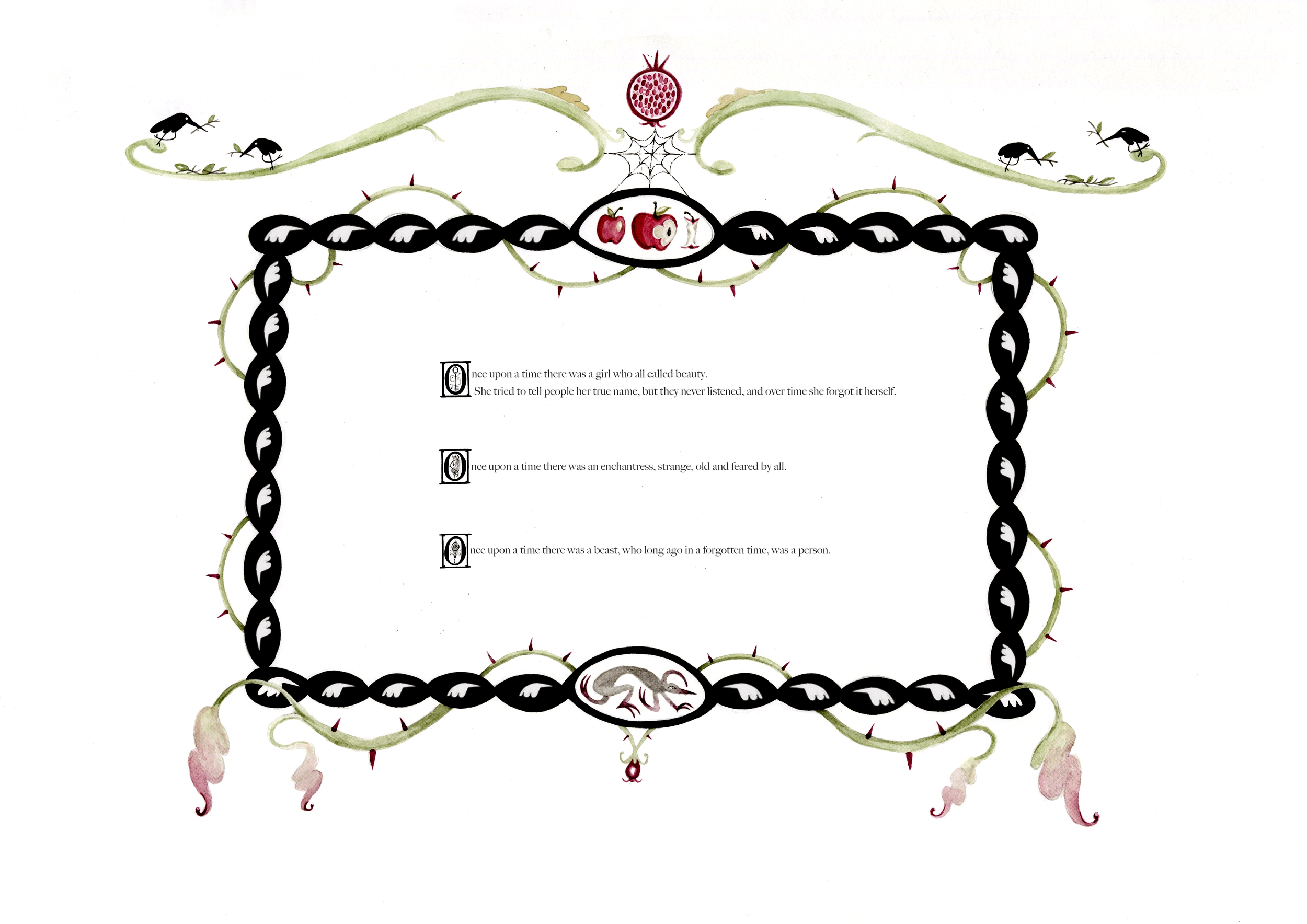
For my version of the fairytale I wanted to honor the feminist history of the story, acknowledging however that the world has changed greatly since the first version in published in 1740. My story’s message is reflective of my experience of being a woman in 21st century, navigating a world in which there are forced expectations of their character dictated by patriarchal ideals. The societal fear of women that are wild or uncontrollable, to not be opinionated or angry in fear of being seen as undesirable. The expectation to be beautiful, and the experience of being overlooked. Inspired by the works of Angela Carter, my own retelling follows the character of Beauty, trapped and alone, who has lost the knowledge of her true name. Only by shedding her skin and accepting an innate beast within, can she finally recover it. Her transformation into the beast is symbolic of her accepting her wildness and regaining control over her own body and learning how to be free.